
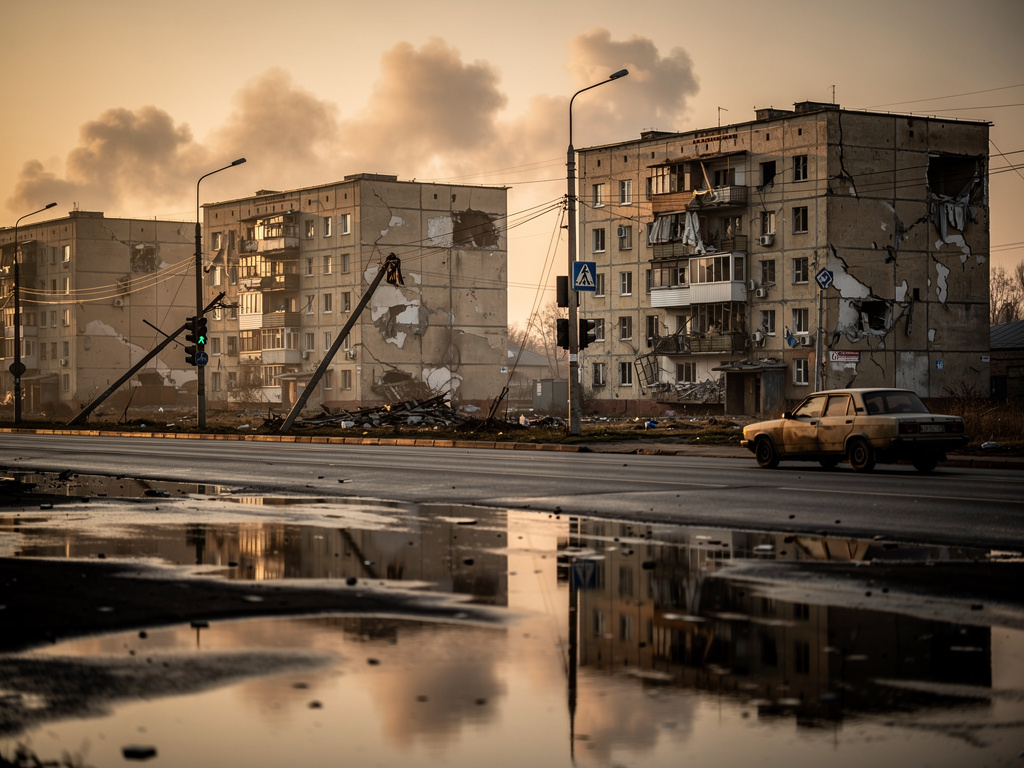
Zaporizhzhia Bombardment Highlights Nuclear Threat in Russia-Ukraine War
In the Russia Ukraine war, Russia conducted 704 air attacks on Ukraine's Zaporizhzhia region over the last 24 hours, including 17 air strikes, according to regional authorities, reflecting the scale of ongoing Russian airstrikes in the corridor. Casualties were reported in Zaporizhzhia city, with one killed and three injured as the bombardment intensified, and officials warned of further strikes and damage to civilian infrastructure across the region. Separately, Ukrainian overnight drone attacks hit Moscow, triggering an industrial fire in Russia's Tula region and illustrating the broader reach of the conflict.
Background & Context
- In the context of the Russia Ukraine war, the Zaporizhzhia region in southeastern Ukraine has long been a focal point of near-daily escalation along frontlines and in adjacent Russian territories, shaping civilian safety, energy infrastructure, and the ability of local authorities to coordinate relief and civil defense.
- The late-2025 cycle has featured mass airstrikes conducted by the Russian Armed Forces and cross-border drone activity attributed to Ukrainian forces, illustrating a multiform battlefield where air power, unmanned systems, and artillery exchanges determine daily dynamics for communities on both sides.
- Important actors include the Russian Armed Forces, the Ukrainian Armed Forces, and the Zaporizhzhia Regional Military Administration, each navigating strategic objectives, civilian administration, and humanitarian responsibilities under the pressure of ongoing combat and shifting frontlines.
- On December 24, 2025, the reported events underscored the near-daily escalation along the frontlines, with sustained strikes and drone operations likely affecting critical electricity and water infrastructure, displacement risks, and public communication from regional authorities.
- This background sits within a broader geopolitical frame in which Russia's military posture, deterrence concepts, and regional security dynamics intersect with the human toll of war in southeastern Ukraine, prompting ongoing analysis by policymakers and observers.
- In the wider discourse on the Russia Ukraine war, secondary topics such as nuclear threats, NATO-related tensions, and Russia's strategic forces are frequently discussed, though the December 2025 incident itself centers on conventional operations and regional stability, with questions like what is Russia's nuclear doctrine occasionally arising in analyses.
Key Developments & Timeline
-
Timeframe: Last 24 hours in the Zaporizhzhia region saw a heavy surge in activity as Russia reportedly conducted 704 air attacks, with 17 air strikes confirmed. This level of aerial bombardment underscores the ongoing intensity of the Russia Ukraine war in this frontline area, where regional authorities report sustained pressure on infrastructure, utilities, and civilian populations. The sustained air offensive signals a critical phase of the conflict with widespread impacts on daily life in the region.
-
Civilian impact: Casualties in the Zaporizhzhia region include at least 1 killed and 3 injured, with injuries reported in the city of Zaporizhzhia itself. Such losses highlight the human cost of the fighting and raise concerns for local hospitals, emergency services, and displaced residents. The incident underscores the fragility of civilian safety amid ongoing hostilities and the need for humanitarian considerations in conflict reporting.
-
Cross-border action: Overnight Ukrainian drone strikes hit Moscow and caused an industrial fire in the Tula region, illustrating how hostilities have extended beyond frontline zones and affected major urban centers. The event contributes to the broader climate of escalation within the Russia military posture and regional risk, emphasizing the volatility of the Russia–Ukraine conflict and the potential for wider spillovers beyond traditional battlelines.
-
Context & sources: The incident figures come from regional authorities and reflect ongoing hostilities within the Russia–Ukraine war. As authorities continue to monitor day-to-day developments, observers stress the importance of timely, credible reporting to understand the current phase of the conflict and the evolving frontlines in real time.
Official Statements & Analysis
In the Russia Ukraine war, authorities report that "At least one person has been killed and three injured in Russian attacks on Ukraine’s Zaporizhzhia region," a stark confirmation of the civilian toll amid heavy bombardment that has disrupted water and power supplies, damaged multiple homes and schools, and forced thousands of residents to seek shelter in basements and designated safe zones. The briefing adds that Russia conducted 704 air attacks on Zaporizhzhia in the last 24 hours, including 17 air strikes, underscoring the sustained intensity of the campaign and the ongoing strain on local authorities' ability to coordinate evacuations, deliver humanitarian assistance, and maintain essential services under bombardment.
Separately, Ukrainian overnight drone attacks hit Moscow, triggering an industrial fire in the Tula region, a development that signals potential cross-border spillover and raises questions about escalation dynamics, civilian protection, and the adaptability of regional emergency responses to evolving fronts and from air operations into neighboring territories. As a Russia Ukraine war latest update, analysts and officials stress the need for up-to-date alerts, verified shelter locations, and robust evacuation planning, while policy discussions focus on military strategy and nuclear threat preparedness to manage shifting frontline activity, regional instability, and the broader implications for security in the region.
Conclusion
In the Russia Ukraine war, civilian risk remains elevated in the Zaporizhzhia region due to sustained bombardment, underscoring the need for well‑planned sheltering, clearly marked evacuation routes, and ongoing public guidance to protect vulnerable communities in frontline zones globally. The events also show how cross-border activity—drone incursions and Russian airstrikes—can produce spillovers into nearby regions such as Moscow or Tula, highlighting why residents should maintain up‑to‑date alerts, verify shelter locations, and ensure emergency kits remain ready across households, businesses, and critical infrastructure. Analysts may continue to weigh potential shifts in regional security dynamics and a broader defense capabilities posture, making reference to deterrence in future operations while prioritizing civilian protection and accurate information dissemination. As the conflict evolves, the conversation around long‑term risk—including questions about nuclear posture and broader geopolitical tensions—remains pertinent, and stakeholders should consider what is Russia's nuclear doctrine and how that could shape risk perception and preparedness.
MREs / Emergency Food – Easy-to-store, ready-to-eat meals with long shelf life.
Ammo Cans & Hard Cases – Secure gear and supplies from damage — check out crushproof containers.
Related: UN General Assembly Supports Two-State Solution Amid Israel Airstrikes
Related: Russia Ukraine War: Major Missile Strike Amid Peace Talks