
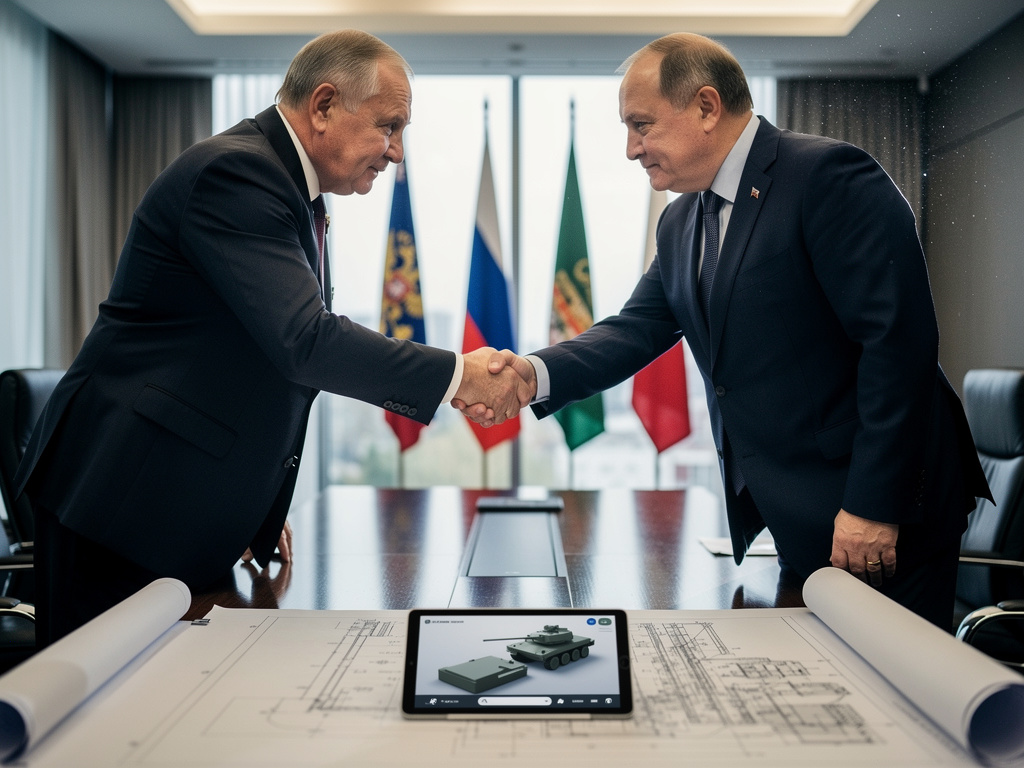
Syria and Russia Expand Defense-Industry Cooperation in Moscow Talks
Syria and Russia held high-level talks in Moscow aimed at expanding military-cooperation and advancing a wide-ranging defense-industry partnership, part of a broader effort to modernize the Syrian Arab Army and transfer know-how. Officials cited defense modernization, joint research and development, and the transfer of equipment as core elements, with President Putin and Damascus ministers foreseeing closer coordination on international forums and security arrangements around Khmeimim airbase and Tartous. Russia reiterated steadfast support for Syria's territorial integrity, condemned Israeli violations as a destabilizing threat, and signaled ongoing engagement to preserve prior security deals while pursuing reconstruction, infrastructure investment, and broader political-diplomatic ties.
Background & Context
Syria’s civil war, which began in 2011, ended with a reconfigured government under new authorities after the removal of Bashar al-Assad, a shift that has substantially redefined regional security calculations and emerged as a central thread in Syria news coverage. Russia became a pivotal ally, providing air support and military aid that helped sustain the Assad regime and shape postwar outcomes. In the current framework, Moscow has sought to preserve security arrangements at key bases, notably the Khmeimim airbase on the western coast and the Tartous naval base on the Mediterranean, while linking continued cooperation to broader geopolitical objectives and reconstruction prospects, with regional players such as Israel continuing to shape security calculations. The talks emphasize ongoing military-technical collaboration, planned reconstruction investments, and continued political and diplomatic coordination with Russia in international forums, including discussions about long-term security guarantees and missile defense, and potential expansions of Russian presence, as reflected by the October visit of Ahmed al-Sharaa to Moscow, which signaled readiness to honor past deals. Overall, the situation remains anchored in a pattern of bilateral engagement that prioritizes security arrangements, reconstruction support, and diplomatic alignment, with Syria seeking stability amid regional tensions, while Russia positions itself as a guarantor of retained influence through bases, defense ties, and ongoing dialogue in international forums.
Key Developments & Timeline
- July 2025: Syrian Foreign Minister Asaad Hassan Al-Shaibani stated Russia would be by Syria's side in the new government’s first Moscow visit. This public assurance fed into the syria news cycle as a signal of renewed alignment between Damascus and Moscow ahead of formal talks in the Russian capital. The statement set the stage for high-level discussions that would follow, with a clear emphasis on expanding military-industrial cooperation and strengthening political-diplomatic coordination. The move underscored Moscow’s ongoing engagement in the region and reinforced expectations of continued cooperation in defense planning and regional security dynamics.
- October 2025: Ahmed al-Sharaa visited Russia and pledged to honour past deals, signaling secure bases and continued engagement. The visit highlighted Damascus’s intent to sustain long-standing security arrangements, including Moscow’s presence at key bases, and to maintain a predictable framework for future collaboration. It also reflected the broader pattern of sustained Russian involvement in Syria, reinforcing expectations of stable bases and ongoing dialogue as bilateral ties extended beyond immediate crises to include broader reconstruction and investment considerations within a security-focused partnership.
- December 24, 2025: Syrian foreign and defence ministers met President Putin in Moscow to discuss expanded military-industrial cooperation and other bilateral issues. The discussions outlined concrete goals, including strengthening the Syrian Arab Army, modernizing equipment, transferring know-how, and pursuing joint R&D in defense sectors. Russia reaffirmed steadfast support for Syria's territorial integrity and condemned Israeli violations as a direct threat to regional security. The meeting was framed within a broader pattern of engagement since the removal of Bashar al-Assad and reflected a comprehensive approach to security, diplomacy, and economic cooperation—aligning military modernization with reconstruction and investment efforts in the Middle East.
Official Statements & Analysis
In recent Syria news, Syria’s foreign and defence ministers met President Vladimir Putin in Moscow to discuss expanding strategic military-industrial cooperation designed to strengthen the Syrian Arab Army and keep pace with modern developments in military industries. As one official stated, "During the meeting, both sides reviewed ways to advance military and technical partnership in a manner that strengthens the defensive capabilities of the Syrian Arab Army and keeps pace with modern developments in military industries." The talks also touched on renewing relations, described by Moscow as "many interesting and useful beginnings" discussed by the two sides on renewing relations, and Moscow’s condemnation of repeated Israeli violations of Syrian territory, describing them as a direct threat to regional security and stability.
This framing matters because it signals Moscow's intent to anchor security arrangements around existing bases while expanding military aid, with potential implications for regional balance, continued Russian military presence, and reconstruction and investment plans that could alter local economies. Taken together with ongoing israel gaza tensions, the statements underscore the volatility of the Levant and the need for careful monitoring of risk levels, border dynamics, and travel advisories as foreign and defense diplomacy shapes the next phase of Syria's post-conflict trajectory.
Conclusion
In Syria news coverage, Moscow's talks with Damascus underscore a deliberate push to strengthen defense capabilities through expanded military-industrial cooperation, transfer of expertise, and R&D to modernize the Syrian Arab Army, while Russia reiterates support for Syria's territorial integrity amid ongoing regional volatility and Moscow's aim to preserve security arrangements around Syrian bases and continue engagement on past agreements. The outlook anticipates continued reconstruction-related investment and infrastructure development, broader defense modernization, and sustained political coordination in international forums, yet risks include regional flare-ups, rapid shifts in alliance dynamics, and cross-border tensions with Israel, including israel gaza ceasefire dynamics, that could disrupt aid access and trade routes or trigger escalation. For survival-focused communities, monitoring shifts in regional risk, border controls, humanitarian corridors, and the pace of reconstruction will be essential as Moscow and Damascus maintain cooperation, and the longer-term outlook suggests a fragile but meaningful regional stabilization if diplomatic engagement holds, along with steady though constrained access for aid and commerce.
Solar Generators – Compact solar generators to keep your essentials running off-grid.
Multitools & EDC – Be ready for anything — check out trusted multitools for everyday carry.