
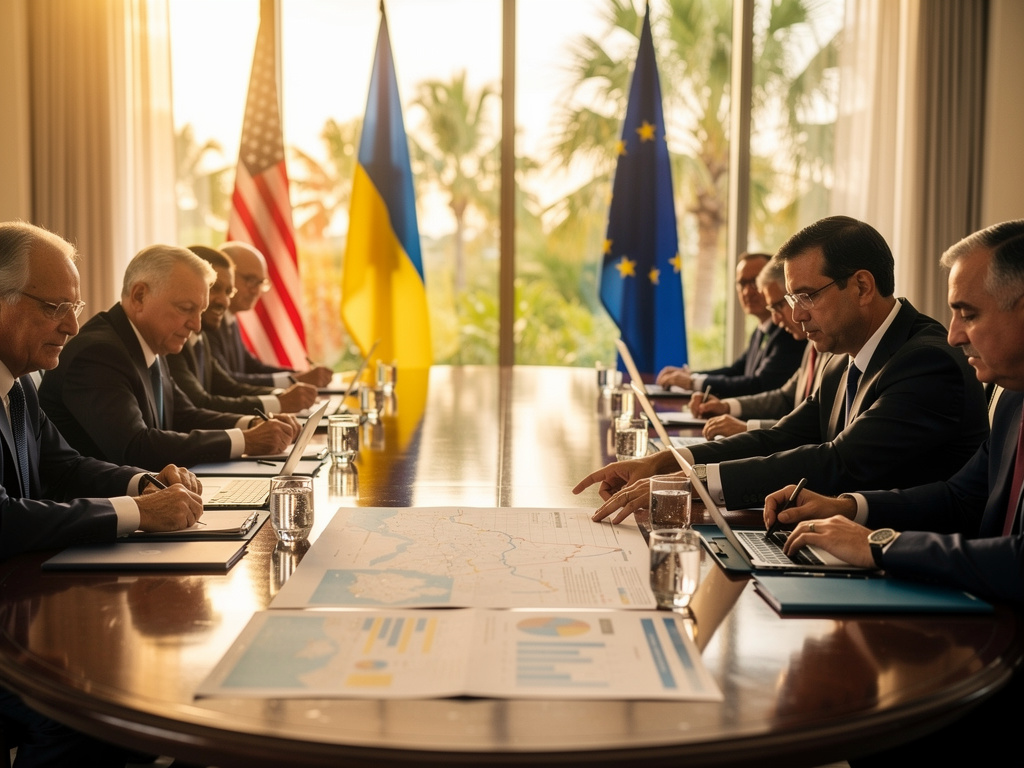
Florida Talks Advance U.S.-Backed Peace Plan for Ukraine
In Florida, negotiators are pursuing a U.S.-backed peace plan to end the Russia Ukraine war, with a Kremlin envoy calling the talks constructive as part of a broader diplomatic push. Participants include Kirill Dmitriev, Steve Witkoff, and Jared Kushner, with Kyiv and European partners meeting in Berlin to push the effort forward. Ukrainian President Zelenskyy warned that outcomes hinge on the U.S. posture after discussions with Russia, while Moscow signaled it would press its conditions, even as EU leaders agreed to 90 billion euros in aid to Ukraine over the next two years, funded by capital markets after Belgium blocked the use of frozen Russian assets.
Background & Context
In the context of the Russia Ukraine war, the talks unfold within a U.S.-backed diplomatic initiative to end the conflict following Russia’s 2022 invasion, with aims to reduce fighting while addressing security guarantees, humanitarian needs, and the broader security architecture sought by Ukraine and its European partners. Participants include Kremlin officials, U.S. envoys, Ukrainian leadership, and European partners, and the European Union has pledged substantial financial support to sustain Ukraine’s military and economic needs over the next two years, funded in part through capital markets after Belgium blocked the use of frozen Russian assets; the package covers defense, reconstruction, macro-financial stabilization, and energy resilience to support Ukraine’s post-war recovery. This effort builds on earlier diplomatic channels, notably a monthslong push led by the Trump administration that included discussions in Berlin with Ukrainian and European partners before the Florida talks, reflecting a continuing but stalled pursuit of terms that could halt hostilities while addressing allied security commitments. Analysts have weighed how Russia nuclear weapons and deterrence posture could influence the negotiations, with discussions featuring figures such as Kirill Dmitriev, Steve Witkoff, Jared Kushner, President Volodymyr Zelenskyy, President Vladimir Putin, and allied European leaders; some have asked what is Russia's nuclear doctrine as part of assessing security guarantees, escalation risks, and the potential implications for Russia NATO tensions and regional stability.
Key Developments & Timeline
- Earlier in the week: In the context of the Russia Ukraine war, Ukrainian and European officials met with U.S. representatives in Berlin as part of the peace push.
- Ukraine’s chief negotiator had meetings in the United States with American and European partners prior to or during the Florida talks, signaling ongoing diplomatic engagement on negotiations.
- Friday (prior to December 21): Putin stated confidence that Moscow would achieve its military goals if Kyiv does not agree to Russia’s terms in peace talks.
- December 21, 2025: Talks in Florida (Miami) involving Kirill Dmitriev, Steve Witkoff, and Jared Kushner; discussions described as constructive.
- Saturday (following December 21): Zelenskyy said much would depend on the U.S. posture after discussions with the Russians.
- Around the same period: European Union leaders agreed to provide €90 billion to Ukraine for the next two years, to be borrowed via capital markets, after Belgium blocked the use of frozen Russian assets.
- Context: The peace initiative is part of former President Trump’s broad push to end the conflict, reflecting a mix of Moscow and Kyiv demands within the geopolitical backdrop.
Official Statements & Analysis
In the Russia Ukraine war, officials describe the latest negotiations as cautiously hopeful amid ongoing diplomacy, balancing momentum in talks with the harsh realities on the frontline, the pressures on regional markets, the risk of renewed fighting, and the broader political calculations in Washington and European capitals about what a peace settlement might require from Kyiv, Moscow, and international partners, including assurances on security guarantees, reconstruction timelines, and the fate of displaced civilians. "The discussions are proceeding constructively." "Much will depend on the U.S. posture after discussions with the Russians."
"Kremlin would achieve its military goals if Kyiv didn't agree to Russia's conditions in peace talks." This framing matters because it links diplomatic talks to battlefield realities and broader security concerns, suggesting that shifts in posture, sanctions, and energy flows could ripple through energy and commodity markets, affect civilian safety and humanitarian access, while EU leaders have pledged 90 billion euros for Ukraine over two years, financed through capital markets despite blocks on frozen Russian assets, and debates about what is Russia's nuclear doctrine and nuclear deterrence considerations continue to shape international responses, including the risk assessments that inform shelter, water, and power infrastructure resilience in affected regions.
Conclusion
The Russia Ukraine war is at a pivotal moment, with diplomacy and financial backing shaping potential paths to peace and the risk of renewed hostilities, as international actors weigh ceasefires, humanitarian corridors, and long-term security guarantees. A U.S.-backed peace plan and the EU’s 90 billion euros in support for Ukraine could reduce immediate pressures, but lasting resolution depends on the United States’ posture and Kyiv’s willingness to meet Moscow’s conditions, including credible verifications and timetables. If negotiations advance, a cooperative settlement remains possible, reducing regional instability and safeguarding civilian safety, whereas persistent stalemate could prolong conflict and complicate energy markets and humanitarian access, with spillovers affecting neighboring economies and local governance. Looking ahead, observers will watch how security dynamics evolve, including questions like what is Russia's nuclear doctrine and how nuclear deterrence, policy, and defense capabilities influence future operations and international responses amid Russia NATO tensions, sanctions regimes, and the evolving balance of power.
Tactical Flashlights – Reliable light source for any emergency or power outage.
Portable Camp Stoves – Boil, cook, and heat off-grid — shop top-rated emergency stoves today.
Related: China-CELAC Forum: Xi Jinping Announces Five Development Programs
Related: Putin Endorses US Peace Plan Only if Ukraine Cedes Territory