
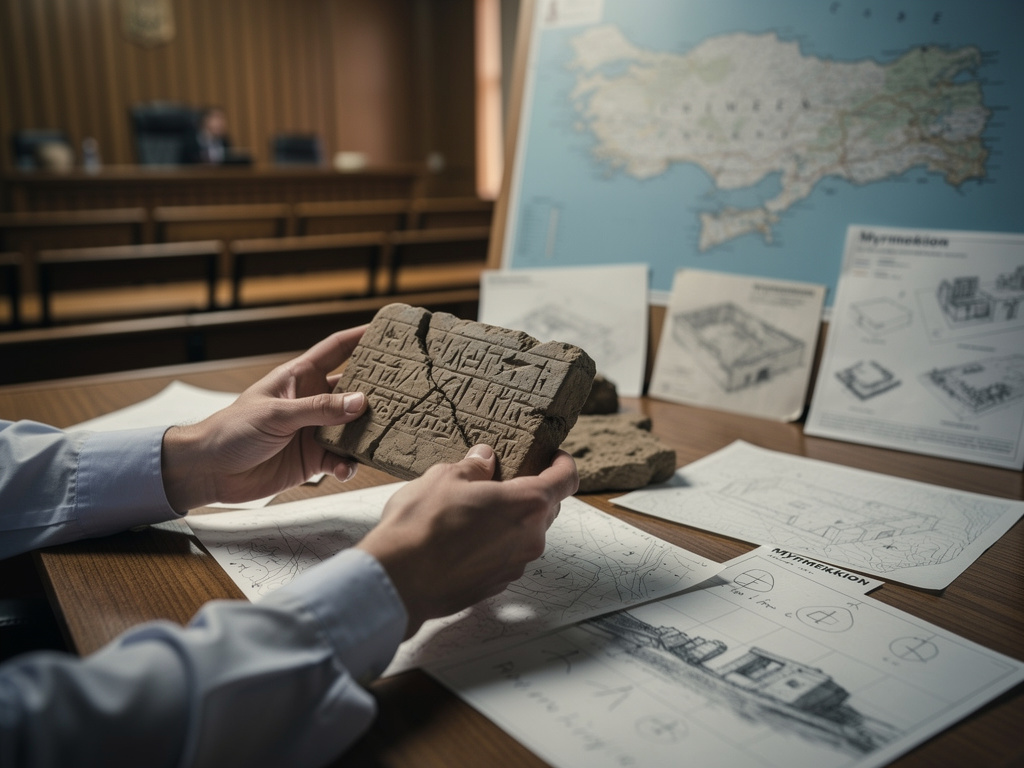
Poland Extradition Case Over Butyagin Ties Crimea Archaeology to Heritage
Ukraine has filed an extradition request with Poland to transfer Oleksandr Butyagin, a senior archaeologist at the State Hermitage Museum, who was detained in Warsaw on December 4, 2025, as part of a cross-border probe into Crimea-related heritage crimes. Kyiv accuses him of illegal excavations at Myrmekion in Crimea (near Kerch) from 2014 to 2019, conducted without Ukrainian permits and resulting in damage to Ukrainian cultural heritage valued at over 200 million hryvnia. A Polish court ordered 40 days of custody while the extradition process proceeds, with the final decision to be made by a Polish court, in a case that underscores tensions over Crimea and cultural protection amid the Russia-Ukraine conflict.
Background & Context
- In the context of the Russia Ukraine war, Russia illegally annexed Crimea in February 2014 after its invasion of the peninsula and the Donbas region, a move that reshaped regional geopolitics and triggered ongoing sanctions and diplomatic disputes across Europe and beyond.
- Since 2014, Ukraine has accused Russia of conducting archaeological work in Crimea without Ukrainian permits and of exporting finds to Russian cities, raising concerns about cultural heritage and the limits of cross-border investigations.
- Oleksandr Butyagin has overseen excavations at Myrmekion, the ancient Greek colony near Kerch, since 1999, linking long-term archaeological research to a contested border region where access and control are politically charged.
- In November 2024, Ukraine’s Prosecutor General’s Office charged an unnamed Russian citizen — later identified as Butyagin — with illegal excavations; he was detained in Poland while delivering lectures, and Polish authorities ordered 40 days in custody during extradition proceedings.
- If extradited and convicted by Ukrainian courts, he faces a potential sentence of one to ten years, illustrating how cultural-rights and criminal jurisdictions intersect amid broader security tensions in the Crimea and Donbas areas.
- Previous diplomatic and legal steps are noted, with Kyiv filing an extradition request with Poland in 2025; the Polish court will decide on the request, reflecting ongoing legal channels alongside diplomatic disputes.
- Important actors include the Ukraine Prosecutor General’s Office, the Polish Warsaw District Prosecutor's Office, Oleksandr Butyagin, and institutions such as the SBU, with cultural authorities like the Russian Academy of Sciences and the State Hermitage Museum involved in broader academic contexts.
- Contextual background also features decisions about protecting archaeological heritage in disputed territories, as seen in the Russia Ukraine war latest update, where discoveries can become flashpoints in Russia's broader geopolitical confrontation with Ukraine, the West, and international museum networks.
Key Developments & Timeline
-
2014–2019: Butyagin leads excavations at Myrmekion near Kerch, Crimea, during the period of occupation.
This phase unfolds amid wider geopolitical tensions and the ongoing conflict framework that surrounds Crimea, placing the project within the broader Russia Ukraine war context. The activities are later referenced in the timeline of events as the starting point for the case concerning illegal excavations in occupied Ukrainian territory.
-
November 2024: Ukraine's Prosecutor General’s Office charges a Russian citizen with illegal excavations in Crimea (later identified as Butyagin).
The filing demonstrates Kyiv’s use of international legal channels to pursue accountability for acts on occupied Ukrainian land, contributing to the ongoing narrative of the Russia Ukraine war and highlighting the cross-border dimensions of cultural heritage violations tied to Crimea’s status.
-
4 December 2025: Butyagin is detained in Warsaw, Poland while traveling; Polish court orders 40 days of custody (to 13 January).
The detention marks a pivotal procedural development, triggering formal extradition considerations and underscoring how cross-border cooperation is mobilized in response to alleged crimes tied to occupied Ukrainian territory.
-
23 December 2025: Ukraine submits an extradition request to Poland.
The request seeks the transfer of Butyagin to Kyiv for prosecution, illustrating Kyiv’s effort to pursue legal action through international cooperation amid the Crimea dispute and the broader security implications of the Russia Ukraine war.
-
Ongoing: Polish court will decide on extradition; potential transfer to Ukraine if granted.
The eventual decision will clarify how Ukraine’s legal actions intersect with European judicial processes and regional security dynamics, within the ongoing geopolitical context of the Russia Ukraine war and associated diplomatic considerations.
Official Statements & Analysis
Kremlin spokesman Dmitry Peskov described the detention as "legal arbitrariness," framing it as a political overstep that undermines due process even as authorities pursue charges related to illegal excavations in Crimea. The Russian Academy of Sciences attributed the detention to motives they deem "absurd in its motivations," signaling an official rejection of the charges and underscoring how legal actions in contested spaces become flashpoints in the broader geopolitical contest. The State Hermitage Museum said "all international standards were observed during the expeditions," while Ukrainian authorities characterized the affair as involving "the so-called cultural layer of the Ukrainian peninsula to a depth of almost two metres," emphasizing competing heritage claims tied to Crimea's annexation.
These statements illustrate how legal risk, diplomatic friction, and cultural heritage protection collide in contested territories, placing the extradition case within the wider Russia geopolitical conflict and shaping international perception amid the ongoing Russia Ukraine war narrative, with observers watching whether due process will be respected and whether academic collaborations can remain insulated from political rancor. As the Polish court weighs extradition, the episode underscores the need for meticulous permits, transparent international oversight, and robust risk management for researchers and institutions operating near Crimea or other disputed zones—an issue that resonates with the Russia Ukraine war latest update and the persistent challenge of cross-border scholarly collaboration in archaeology, heritage preservation, and international law.
Conclusion
The case underscores how cultural heritage protection intersects with cross-border legal processes amid the Russia Ukraine war and the broader Crimea dispute, illustrating how scholarly work can become entangled in geopolitical contention, as international law and norms for accountability guide such cases. As the Polish court weighs extradition, the outcome will reverberate through diplomatic channels between Ukraine, Poland, and Russia and may shape patterns of cross-border collaboration, travel, and compliance with international law in contested regions worldwide. If extradited and convicted, a prison term in the 1–10 year range remains a possibility, underscoring substantial legal risk for researchers and survivalists who operate in politically sensitive areas and must verify destination status before expeditions. Looking ahead, ongoing developments will likely influence how cultural heritage protection is enforced in Crimea, set precedents for international cooperation, and inform discussions about defense capabilities and cultural diplomacy within the broader context of the Russia geopolitical conflict.
LED Lanterns – Bright, efficient, and long-lasting — a must for power outages or camps.
Portable Solar Panels – Capture energy anywhere with portable high-efficiency panels.
Related: Iran’s Human Rights Crisis: Record High Executions Spark Outcry
Related: Taliban’s Diplomatic Engagements with India and Pakistan