
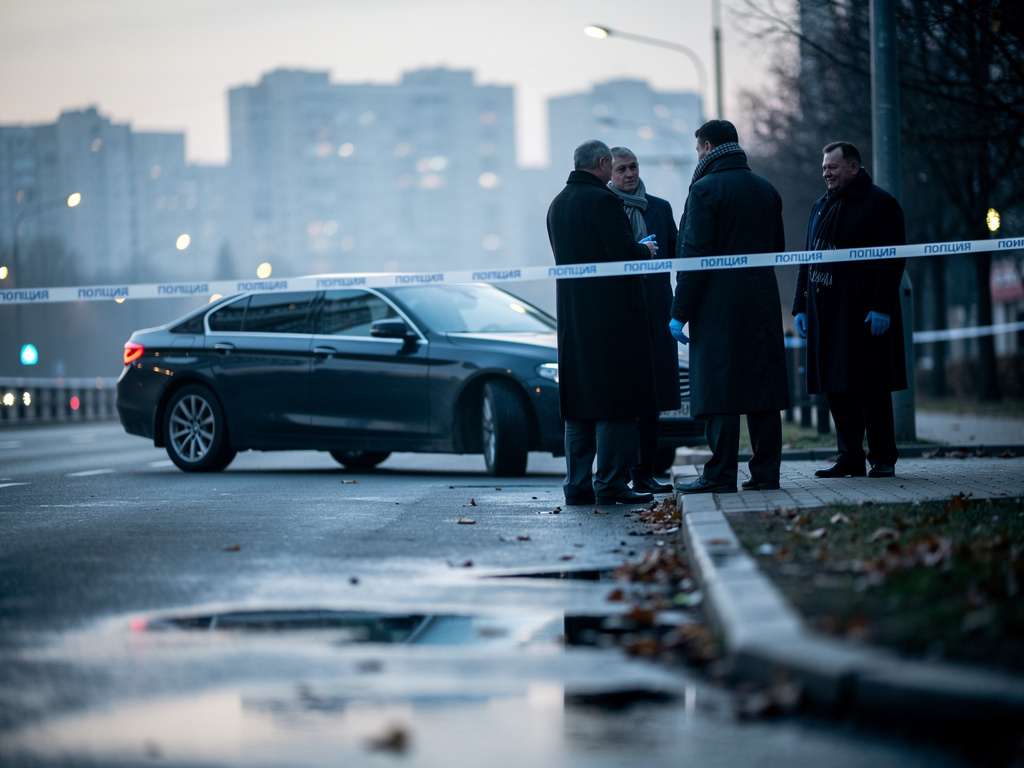
Russia Ukraine War: Car Bomb Kills Russian General
The Russia Ukraine War took another dangerous turn as Lt Gen Fanil Sarvarov, head of the Russian general staff's operational training directorate, was killed by a car bomb in Moscow early in the morning. Investigators say the blast on Yaseneva Street left the driver dead and Sarvarov mortally wounded, with authorities pursuing multiple lines of inquiry including possible Ukrainian intelligence involvement. Ukraine has not claimed responsibility, motive details were not disclosed, and the incident fits a pattern of high-profile Russian officer killings Kyiv has conducted or claimed in the past as wartime diplomacy continues, including Florida talks between the United States and Ukraine.
Background & Context
- Fanil Sarvarov, a long-serving Russian officer with experience in post‑Soviet conflicts and the war in Ukraine, oversaw combat training and readiness for Russia’s armed forces, illustrating how individual commanders feed into the broader military posture in the Russia Ukraine war.
- The incident unfolds within a broader context of Ukrainian targeting of Russian military personnel and officials since the start of the war, signaling a security dynamic that extends beyond conventional battlefield activity.
- In December 2024, Kyiv claimed responsibility for the assassination of Lt Gen Igor Kirillov, head of Russia’s nuclear, biological and chemical protection forces, a development that heightens concerns about strategic security in the conflict.
- Putin described Kirillov’s killing as a “major blunder” by Russia’s security services, underscoring the high-stakes nature of political violence amid ongoing state actions in the broader landscape of Russia NATO tensions and nuclear-era deterrence, while raising questions such as what is Russia's nuclear doctrine.
- Diplomatic talks between Ukraine and the United States were reported to be taking place in Florida as efforts to end the war continued, illustrating that diplomacy remains active alongside ongoing confrontations and intelligence operations.
- Public reaction in the available sources is divided: while Russian officials frame the event as a brutal murder, some accounts note that Ukraine has not claimed responsibility for the Moscow attack, a discrepancy that adds ambiguity to attribution and response in the Russia Ukraine war.
Key Developments & Timeline
- December 2024 — Kyiv claims responsibility for the assassination of Lt Gen Igor Kirillov (head of Russia’s NBCP forces). This action sits within the broader context of the Russia Ukraine war and continues a historical pattern of high-profile Russian officer killings and Ukrainian actions against Russian targets. The claim underscores intensified security dynamics surrounding Russia’s military leadership and raises questions about attribution, accountability, and external involvement in the conflict. Kirillov’s role in Russia’s nuclear and NBCP posture amplifies the geopolitical stakes for Moscow and its allies in the regional security landscape.
- December 22, 2025 (approx 7am) — A car bomb explodes on Yaseneva Street, Moscow; Lt Gen Fanil Sarvarov killed; the driver killed. Sarvarov served as the head of the operational training directorate of Russia’s general staff, placing a senior military figure at the center of a violent incident that mobilizes security services and prompts rapid investigative responses. The event marks a significant escalation in attacks targeting Russian military leadership and feeds into the volatile security climate around Moscow and the broader theater of Russia’s military operations.
- Shortly after — Investigators pursue multiple lines of inquiry including potential Ukrainian intelligence involvement; no responsibility claimed by Ukraine as of reporting. This development illustrates the complex attribution landscape in high-profile assaults, with authorities evaluating foreign involvement while maintaining cautious, multi-track investigative approaches amid ongoing regional tensions. The ambiguity surrounding responsibility reflects the broader information and intelligence challenges that accompany the Russia Ukraine war narrative.
- Around the same period — Zelenskyy comments on ongoing peace talks in Florida and US-proposed terms; Russia-US talks in Florida continued. The diplomatic dimension highlights parallel efforts to negotiate terms amid security escalations, signaling that negotiations and international diplomacy persist alongside violent incidents. The Florida talks illustrate how regional diplomacy intersects with military and intelligence developments in the current geopolitical milieu.
Official Statements & Analysis
In Moscow, amid the Russia Ukraine war, Russian Lt Gen Fanil Sarvarov, head of the operational training directorate of the Russian armed forces general staff, was killed by a car bomb, and investigators described the incident as a "terrible murder" while pursuing lines of inquiry that include Ukrainian intelligence involvement, with Ukraine having not claimed responsibility. Russian authorities and pro-war voices have urged retaliation, with statements such as "We need to identify and eliminate the entire chain of those who carried out the operation. I don’t think they should be taken prisoner at all – they should simply be destroyed on the spot, as is done with terrorists," signaling a calcified, escalatory posture.
The rhetoric is complemented by the view that "Only the destruction of targets on the enemy’s territory can first disrupt the wave of terrorism and then significantly reduce it," reflecting a punitive doctrine that could influence security calculations in neighboring regions. Amid ongoing war diplomacy, the Florida talks between the United States and Ukraine included early US peace proposal drafts that Kyiv characterized as solid, with one assessment noting, "Overall, it looks quite solid at this stage. There are some things we are probably not ready for...," a dynamic that invites questions about how deterrence and diplomacy intersect and what is Russia's nuclear doctrine.
Conclusion
In the Russia Ukraine war context, the assassination of Lt Gen Fanil Sarvarov highlights how high-level security shocks can reshape military and diplomatic dynamics, with risks spilling into civilian travel and regional stability. For survivalists and readers monitoring risk, this incident underscores the importance of tracking shifts in Russian defense planning, as well as potential retaliation rhetoric that could affect supply chains and urban security in major Russian cities. While authorities pursue lines of inquiry, the broader implications for peace talks remain uncertain, and external mediation efforts in forums such as Florida may continue alongside intelligence assessments about networks involved. Looking ahead, analysts will assess leadership security, the risk of escalation, and how such events influence defense posture and preparedness, possibly prompting renewed emphasis on resilience, risk management, and contingency planning in the context of ongoing geopolitical tensions. For readers following global security, questions such as what is Russia's nuclear doctrine and how these developments affect deterrence will be increasingly relevant as the situation evolves.
Mini Flashlights – Light your way anytime — slip a powerful mini flashlight into your pocket.
Security Mirrors (Wide Angle) – Know what's behind you — install convex mirrors for wide-angle awareness.
Related: Russia Recognizes Taliban Government in Afghanistan
Related: Rising Tensions Over Kashmir Between India and Pakistan