
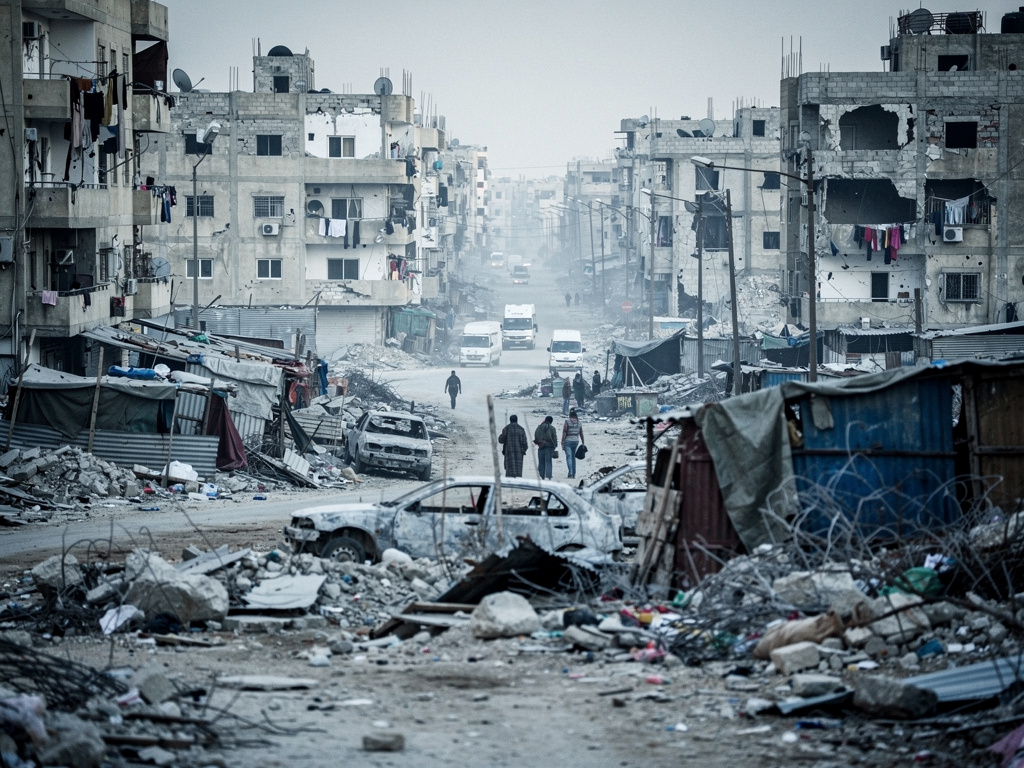
Gaza City in Ruins as Reconstruction Stalls
Gaza City remains in ruins after years of sustained Israeli air attacks, with more than 70,000 Palestinians killed and more than 70% of buildings damaged or destroyed, leaving residents facing dire living conditions. About 2.3 million residents have been displaced, living in damaged homes or tents as reconstruction lags under strict, ongoing restrictions on aid entering Gaza. Despite a ceasefire reached in October, fighting and air strikes persist, and health officials report 11 deaths from building collapses in December as bitter winter rains stress shelters, underscoring that reconstruction will take years and access remains tightly controlled for civilians across Gaza.
Background & Context
The Gaza Strip has endured years of conflict since the 2023 war began on October 7, with consequences rippling across politics, economics, and daily life for its seven million residents. Israel maintains a blockade that controls the ingress and egress of goods, complicating import of construction materials and humanitarian aid, and hampering reconstruction despite repeated calls from international bodies for unfettered access. Widespread destruction has left the majority of housing damaged or destroyed and the population reliant on aid, while the health system stretches to treat casualties, cope with damaged facilities, and respond to outbreaks and the strain of ongoing air raids and heavy rains. The Halawa family’s account from Gaza City offers a human-facing example of these conditions, illustrating how a typical household endures power cuts, limited clean water, shortages of medicines, and constant uncertainty about the next relief delivery. In the broader geopolitical frame, a gaza ceasefire reached in October 2025 provided a temporary respite, but repeated violations and restricted humanitarian corridors have continued to shape reconstruction pace and daily risk faced by residents. Humanitarian organizations and local health officials warn that without sustained access and investment in infrastructure, vulnerable communities face protracted displacement and worsening health outcomes. The situation remains a focal point of international diplomacy and regional security discussions as parties negotiate terms of aid, reconstruction, and long-term governance in a densely urbanized, heavily damaged landscape.
Key Developments & Timeline
-
October 2023: War begins with widespread air attacks on Gaza by Israel. The initial campaign targets urban centers across Gaza City and the Gaza Strip, triggering a rapid humanitarian crisis as civilians seek safety amid collapsing infrastructure. International observers warn of escalating civilian harm, shortages of essential services, and mass displacement. Ongoing coverage emphasizes the human dimension of the conflict in gaza news and related israel news reporting.
-
October 2025: A cease-fire agreement is reached, offering a pause in hostilities, but fighting and air strikes continue. The conflict has produced staggering casualties: well over 70,000 Palestinians killed; more than 70% of buildings damaged or destroyed; approximately 2.3 million residents affected. Reconstruction has not begun due to Israeli control over aid entering Gaza, hampering efforts to restore housing and essential services. The situation remains volatile, with civilians in Gaza City and the Gaza Strip bearing the brunt of the disruption. This development features prominently in gaza news coverage and ongoing israel news analyses.
-
December 2025: Health officials report 11 deaths from building collapses in a single week as winter rains affect tent shelters. The harsh weather compounds living conditions for displaced families, including the Halawa family residence, as they navigate ongoing safety risks and housing insecurity. The combination of collapsed structures and severe shelter shortages underlines the precarious humanitarian situation in the Gaza Strip during the cold season.
Official Statements & Analysis
Gaza Strip remains in ruins after years of conflict, with health authorities reporting more than 70,000 Palestinians killed, over 70% of buildings damaged or destroyed, and 2.3 million residents displaced. A Reuters/Al Jazeera report highlights families like the Halawas living in structurally compromised homes as reconstruction lags under continued restrictions on aid entering Gaza. Despite a ceasefire reached in October, fighting and air strikes persist, and health officials reported 11 building-collapse-related deaths in December as winter rains stress tent shelters. Reconstruction is projected to take years, and humanitarian access remains tightly controlled by Israel, complicating relief efforts and the delivery of essentials such as water, healthcare, and fuel. The implications for civilian safety and public health are acute, with relocations and crowded shelters amplifying disease risk and mental health strain.
Implications include potential improvements in shelter stability if reconstruction accelerates, but the dependencies on external aid and access restrictions mean vulnerabilities persist. Winter weather elevates risk in tent shelters and damaged structures; prioritizing safer shelter options and maintaining emergency supply caches is critical, along with monitoring social and health support networks amid displacement. The risk categories—civilian safety, humanitarian access, infrastructure, displacement, and public health—underscore the need for robust international coordination to safeguard vulnerable populations in Gaza. Policymakers and aid agencies must balance immediate relief with longer-term reconstruction plans, ensuring accountability and transparent access to aid to prevent further deterioration of living conditions in the Gaza Strip.
Conclusion
Gaza news remains dominated by a humanitarian catastrophe, with Gaza City in ruins, more than 70,000 Palestinians killed, 2.3 million displaced, and over 70% of buildings damaged or destroyed, while reconstruction is hampered by continued restrictions on aid. A fragile ceasefire persists only on paper; fighting and air strikes continue, and winter weather worsens shelter conditions, water supply, and sanitation, underscoring the urgent need for safe, reliable access to humanitarian relief and essential services for the affected population. Looking ahead, reconstruction is likely to take years, and progress will hinge on durable humanitarian access, predictable funding, clear timelines for project approvals, and security guarantees that allow aid workers, engineers, and residents to operate with reduced risk, while health and water services are restored. The international community's role will be decisive, demanding sustained oversight, transparent reporting, inclusive planning with affected communities, and equitable reconstruction funding to rebuild housing, hospitals, schools, and critical infrastructure, along with robust contingency measures to prevent further civilian harm, uphold humanitarian standards in future operations, and address long-term resilience.
Gorilla Tape – Stronger than regular duct tape — Gorilla Tape holds fast in the worst conditions.
Pry Bars & Wrecking Tools – Break through or get in/out safely — strong leverage tools built for field use.
Related: Zelenskyy Signals Conditional Summit Amid Rising Russia-Ukraine Tensions
Related: Escalating Humanitarian Crisis in Gaza Amid Airstrikes